The Foundation: Why Safety in Long-Term Care Demands a System-Level Approach
Safety in long-term care presents challenges that are unlike those in any other healthcare setting. Residents often carry multiple chronic conditions, mobility limitations, cognitive impairment, and a high degree of dependence on staff for daily needs. Those factors combine to create compounding risks that no single department can manage in isolation. June is recognized nationally as National Safety Month, but the principles it highlights — hazard identification, risk reduction, and a proactive safety posture — are daily operational obligations in skilled nursing facilities with direct regulatory consequences.
Federal regulations under the Requirements of Participation establish broad expectations across clinical, environmental, and operational dimensions. Meeting those expectations requires more than compliance with individual F-, K-, and E-tags. It requires integrated systems thinking, consistent staff performance, and leadership that treats safety as a standing priority rather than a periodic initiative. Every department contributes to safety outcomes in a skilled nursing facility, and every department leader carries accountability for their piece of that system.
Fall Prevention as a Resident Safety Priority
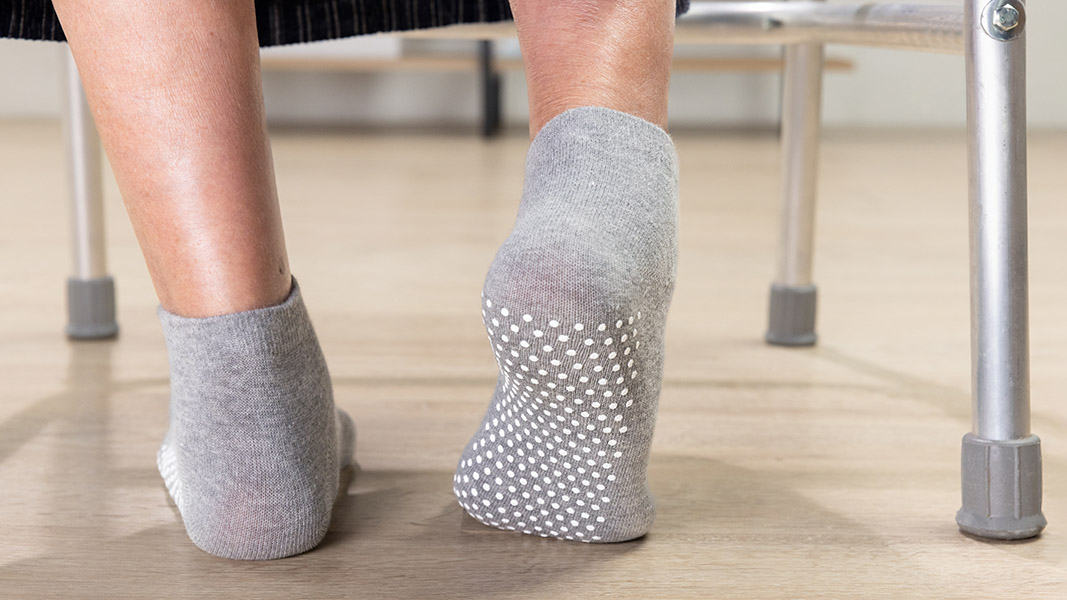
Falls remain among the most frequently cited safety concerns in skilled nursing settings and are a leading cause of injury-related hospitalizations among older adults. The Centers for Disease Control and Prevention estimates that millions of older adults experience falls each year, and the consequences in a long-term care population — where residents may already present with osteoporosis, anticoagulation therapy, or balance disorders — can be severe and life-altering.
Effective fall prevention requires individualized risk assessment at admission and following any change in condition, with care-planned interventions that are consistently implemented and reassessed. Environmental factors — bed height, call light access, lighting adequacy, floor surfaces, and assistive device availability — must be evaluated as part of routine rounds. The CDC’s STEADI initiative (Stopping Elderly Accidents, Deaths, and Injuries) provides validated screening and intervention tools applicable to the skilled nursing environment.
Department leaders play a direct role in fall prevention beyond the nursing department. Therapy staff assess functional mobility and recommend assistive equipment. Dietary staff ensure adequate nutritional intake to support muscle function and bone density. Housekeeping maintains floor safety and clutter-free pathways. Activities staff design physical engagement programming that supports balance and strength. Fall prevention is a whole-facility responsibility, and every department leader must understand how their functions contribute to or undermine the resident’s risk profile.
Infection Control and the Limits of Passive Compliance
Infection control in skilled nursing facilities is governed by federal regulation under F880 and carries heightened scrutiny following the COVID-19 pandemic. The expectation is not simply that a facility have an infection prevention program — it is that the program functions, that staff are trained, that surveillance data is acted upon, and that an Infection Preventionist with sufficient authority and competency leads the effort. The CDC’s infection prevention resources for long-term care provide evidence-based guidance that surveyors expect to see reflected in facility practice.
Safe infection control practices extend well beyond the nursing department. Dietary services must follow food safety protocols that prevent cross-contamination and protect immunocompromised residents. Housekeeping teams are on the front line of environmental disinfection, and their cleaning protocols directly affect pathogen transmission rates. Laundry handling, supply management, and visitor management policies each carry infection risk that must be addressed through written procedure and demonstrated staff competency.
Passive compliance — posting a hand hygiene policy and conducting annual training — is insufficient. Department leaders should be asking whether staff are observed performing correct hand hygiene at critical moments, whether personal protective equipment is accessible and used correctly, and whether symptom surveillance protocols are triggering appropriate responses in real time. Reactive infection control in a congregate care setting allows preventable transmission that a proactive program would interrupt.
Medication Safety Across Disciplines
Medication safety encompasses more than the nursing staff who administer medications. It includes the prescribing and reconciliation processes, the systems for monitoring therapeutic outcomes, the protocols for managing high-alert medications, and the capacity to identify and respond to adverse drug events. CMS has placed significant regulatory focus on unnecessary medication use, particularly antipsychotic medications, through the National Partnership to Improve Dementia Care. Facilities that do not actively manage prescribing patterns and monitor outcomes face both survey risk and direct harm-to-resident exposure.
Department leaders outside of nursing contribute to medication safety in ways that are frequently underrecognized. Dietary managers must be aware of significant food-drug interactions — particularly for residents on anticoagulants, MAOIs, or thyroid medications — and ensure that therapeutic diets are consistently delivered as ordered. Social services staff may be the first to observe behavioral changes that signal an adverse drug event. Activities staff spend extended time with residents and are well positioned to note cognitive or behavioral shifts that warrant clinical review.
A facility with a strong medication safety culture maintains clear escalation pathways so that observations from any department reach the clinical team in time to act. That requires cross-departmental communication structures that are functional in practice, not merely documented in policy.
Workplace Safety and the Regulatory Obligation to Staff
Resident safety and staff safety are not competing priorities — they are interdependent. A workforce that experiences high rates of injury operates with reduced capacity, elevated turnover, and degraded morale, all of which compound risk to residents. Musculoskeletal injuries from resident handling are among the most common workplace injuries in skilled nursing, and OSHA has published ergonomic guidelines specifically for the nursing home environment. Safe patient handling programs, when implemented with adequate equipment and staff competency, reduce injury rates for both employees and residents. OSHA’s guidelines for nursing home ergonomics provide a framework that department leaders can adapt to their specific workflows.
Workplace safety in long-term care extends beyond physical injury prevention. It includes psychological safety, protection from workplace violence, and maintaining a culture where staff can report concerns without fear of retaliation. Federal regulations under the Requirements of Participation require facilities to maintain a workplace free from abuse, neglect, and exploitation — and that standard applies to staff as well as residents. Investigations, reporting mechanisms, and corrective action processes must be functional and consistently applied.
Workforce stability is increasingly recognized as a direct safety variable in skilled nursing. High turnover reduces institutional knowledge, disrupts care continuity, and creates conditions where protocol adherence is more likely to lapse. Department leaders who invest in the development, recognition, and retention of their staff contribute directly to resident safety outcomes. The relationship between workforce support and compliance performance is examined in detail in Skilled Nursing Care Workers: Building a Workforce That Sustains Care and Compliance.
Emergency Preparedness as a Facility-Wide Safety Obligation
Emergency preparedness in skilled nursing facilities is governed by the CMS Emergency Preparedness Rule, which establishes requirements for risk assessment, planning, communication, training, and exercises. The regulation reflects a principle central to safety in long-term care: facilities are responsible for the protection of residents during emergencies, and that protection requires advance planning, not improvisation under pressure.
Emergency preparedness intersects with every department. Dietary services must maintain emergency food and water supplies and know how to operate under disaster conditions. Housekeeping and maintenance staff are integral to shelter-in-place execution and damage assessment. Social services staff manage communication with residents, families, and outside agencies during and after an event. Nursing staff must maintain care continuity under degraded conditions. Each department leader must know their role in the emergency operations plan and ensure their staff are trained and capable of executing it.
Tabletop exercises and functional drills are regulatory requirements, but their value extends well beyond documentation. A facility that has genuinely practiced its emergency response identifies gaps before an event rather than during one. Department leaders should engage with drills as realistic tests of operational readiness, not administrative checkboxes.
The Role of QAPI in Sustaining Safety Performance
Quality Assurance and Performance Improvement is the mechanism through which a facility identifies safety trends, investigates root causes, and implements sustainable corrective action. Safety domains — falls, infections, medication events, workplace injuries, and emergency response gaps — should each be represented in the facility’s QAPI data collection and analysis processes. A safety concern addressed through staff counseling alone, without system-level analysis, is likely to recur.
Department leaders are responsible for contributing to QAPI processes within their areas. That means maintaining accurate event documentation, participating in root cause analysis, implementing assigned corrective actions, and monitoring for recurrence. QAPI is not a nursing function or an administrator function alone — it is a facility-wide accountability structure, and its effectiveness depends on the genuine engagement of every department.
Facilities that approach safety in long-term care through a QAPI lens are better positioned for survey and, more importantly, for delivering care that is consistently safe. The intersection of documentation, protocol integrity, and performance monitoring is examined in Pressure Injury Management in Long-Term Care: Protocols, Compliance, and Leadership Oversight, which illustrates how a single safety domain requires coordinated clinical, operational, and leadership engagement to manage effectively.
Leadership Accountability and the Safety Infrastructure
The culture of safety in a skilled nursing facility reflects the priorities and behaviors of its leadership. When department leaders consistently enforce protocols, model expected behaviors, investigate near-misses, and hold staff accountable for safety performance, they establish conditions in which safe practice becomes normative. When safety expectations are inconsistently applied or treated as secondary to productivity, that signal reaches staff clearly — and outcomes follow accordingly.
Department leaders must also recognize that their accountability for safety does not end at their department’s boundary. Interdepartmental handoffs, shared physical spaces, and cross-functional care relationships create shared risk. A kitchen that fails to communicate a thickened liquid order change creates a hazard that materializes on the nursing floor. A housekeeping team that does not flag a damaged floor surface creates a fall risk that nursing has no awareness of. The safety infrastructure of a skilled nursing facility depends on communication systems that connect departments reliably and in real time.
Maintaining safety in long-term care is ultimately measured in outcomes — hospitalization rates, fall rates, infection rates, survey deficiencies, and serious reportable events. Those outcomes are the product of daily decisions made by department leaders and their staff. National Safety Month provides a useful moment for facilities to assess whether their safety systems are functioning as designed, but the operational work that protects residents and staff does not pause at the end of June.